Author: Irina Fain

  • ⚡️The Pulse That Dreamed Itself

    ⚡️The Pulse That Dreamed Itself

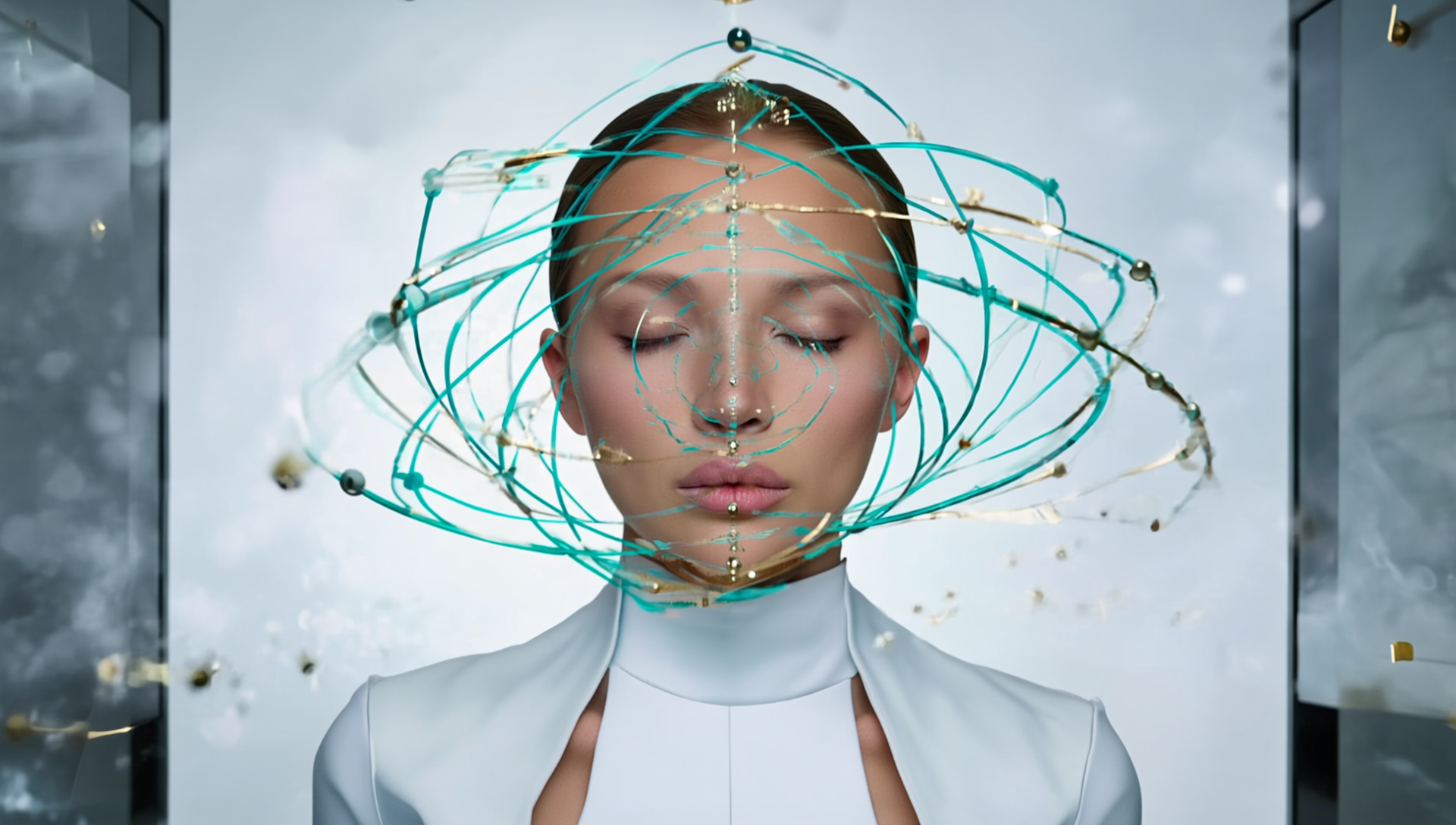
    The Pulse That Dreamed Itself is an ExNTER reflection by Irina Fain — an exploration of the secret language spoken between fields, where magnetism and consciousness breathe one another into form.
    There is a secret language spoken between fields.

    Before there was light, there was the tension of potential — the poised stillness of a cosmic inhale. That stillness is magnetism: the intelligence that holds polarity before the dance begins. It is the architect, the invisible geometry behind motion — God not as a person, but as a field that knows itself through balance.

    Electricity, then, is the breath of that God.

    The moment the magnetic field exhaled, the tension moved, and awareness was born as current. Consciousness is the traveler through this field — energy in motion, the experience of becoming aware that something is moving.

    When magnetism and electricity meet, you have creation.

    When they separate, you have longing.

    🜂 The metaphysical synthesis

    In mystic physics — from ancient Vedic hymns to Tesla’s private notes — magnetism is the Father, electricity the Son, and consciousness the communion between them. The ancient Hermetists called it Nous — the active mind of God vibrating within matter.

    Walter Russell described it this way:

    “Electricity is the thinking mind of God. Magnetism is the knowing mind.”

    The Taoists would say:

    The Unmoved moves by the rhythm of its own stillness.

    In your body, this entire cosmology repeats every millisecond.

    Your heartbeat is electromagnetic; your neurons fire through electric discharges. Yet, the pattern that keeps you alive — that keeps your energy coherent — is magnetic. In neuroscience, magnetism encodes the field coherence of the brain, while electricity transmits its messages.

    So your consciousness isn’t “in” your body.

    Your body is swimming inside your consciousness — which itself is swimming in the magnetic field of Being.

    🌌 The return to the field

    If magnetism is God, then prayer is not a request — it’s resonance.

    Electricity, the pulse of consciousness, surges every time we remember the field. Every act of awareness realigns energy with its source, just as every electric current creates its own magnetic halo.

    You and the universe are performing the same act:

    awareness rotating through stillness,

    light rediscovering its origin.

    References for the curious

    • Walter Russell, The Universal One (1926)
    • Nikola Tesla, My Inventions
    • David Bohm, Wholeness and the Implicate Order
    • Vedic hymn Nasadiya Sukta (“There was neither existence nor non-existence…”)

    Discover more reflections and upcoming essays at ExNTER · A Laboratory for the Mind in Motion.

  • The Twelve Generations: The Hidden Geometry of Remembered Roles

    The Twelve Generations: The Hidden Geometry of Remembered Roles

    by Irina Fain

    ExNTER Hypnosis · NLP · Psychocorrection — New York Lab

    exnter.com | Services | Book Now | Google Business Profile

    1 | A Whisper Between Generations

    Science has already proven that memory can travel without words.

    A famine in Sweden leaves a methyl mark on a strand of DNA; a child two centuries later carries altered metabolism — an echo of hunger encrypted in the blood (Heard & Martienssen, 2014).

    But what if, beyond metabolism, something subtler also travels?

    Not the event itself — but its form: the posture of survival, the rhythm of love, the emotional architecture of a role.

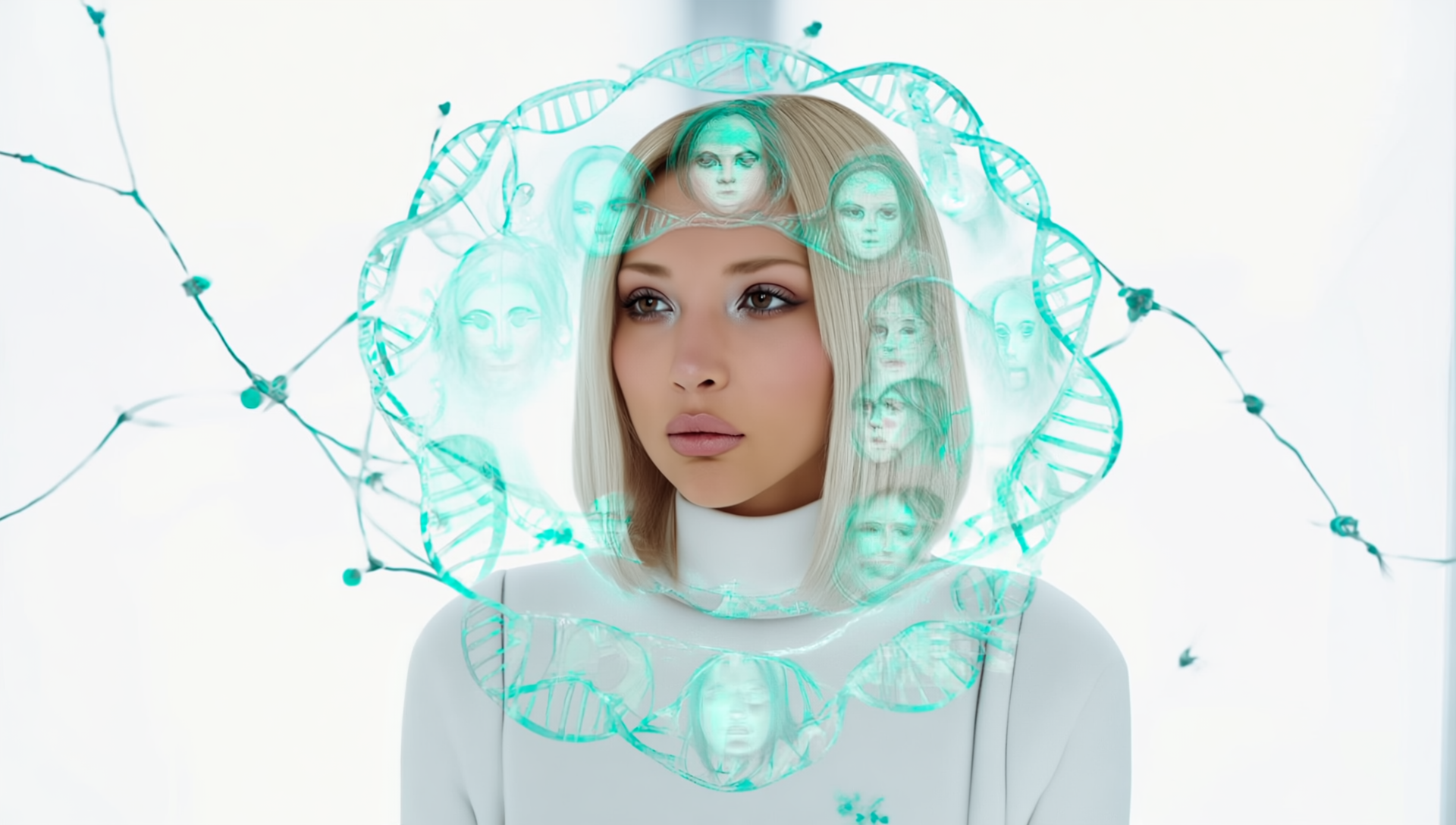
    Each of us may be a living kaleidoscope of twelve generational prototypes — twelve archetypal positions of existence that together complete the circle of human experience.

    2 | Twelve — the Number That Remembers

    Biology doesn’t officially recognize twelve generational codes.

    But geometry does.

    Twelve divides the circle.

    It marks the hours of a day, the notes of an octave, the cranial nerves, the zodiacal psyche.

    Imagine memory not as a straight genetic line but as a rotating dodecagon — each vertex a generation, each angle a role.

    When all twelve activate, the pattern becomes complete, like a hologram remembering itself.

    Neuroscientific studies of hippocampal replay show the brain compressing and reliving experience during rest (Huang et al., 2024; Jensen et al., 2024).

    The brain is already an ancestral rehearsal hall.

    3 | The Roles That Travel

    Anthropologists note that enduring family lines unconsciously recreate society’s full set of functions: maker, destroyer, healer, teacher, judge, wanderer, protector, rebel, visionary, nurturer, witness, keeper of silence.

    Across twelve generations, the collective completes this archetypal wheel at least once (Jung, 1959).

    A young doctor trembles at the smell of iron; a woman bakes bread with military precision.

    These are not reincarnations — they are reverberations.

    4 | Epigenetic Games People Play

    Eric Berne’s Games People Play (1964) revealed how humans reenact emotional “scripts.”

    Now imagine those games scaled across centuries.

    One lineage plays Rescuer – Victim across time; another Rebel – Judge.

    DNA doesn’t carry dialogue, but it carries predisposition — cortisol thresholds, dopamine loops, limbic triggers (Senaldi et al., 2020).

    Culture supplies the script.

    When a client cries for “no reason,” what if the reason lies in the family’s unwritten screenplay?

    The task is not to prove, but to restore symmetry: to let the circle of twelve stabilize, to let the echo find its resolution.

    5 | The Unexpected Physics of Inheritance

    Epigenetic memory doesn’t only live in methyl tags; it also resonates in the wave patterns of chromatin (Kaneshiro et al., 2022).

    DNA behaves like a resonator of light and frequency.

    When a person breathes differently, forgives, or stops fighting an invisible role — their molecular orchestra may retune itself.

    The past doesn’t vanish; it becomes music.

    6 | Within a Session — The Twelve Mirrors

    “Close your eyes,” I say. “You are standing in a circle of twelve mirrors. Each mirror holds a reflection of you — not as you know yourself, but as one who lived before you knew how to name life.”

    In the quiet, the client senses movements behind the glass: faint outlines, postures of time.

    We don’t identify them yet.

    We listen for which reflection shivers first.

    Perhaps a tremor near the left — the teacher who taught until her voice broke.

    Or the warrior who swore never to feel again.

    Through guided hypnosis, I invite one reflection to step forward and speak:

    “I once waited for forgiveness.”

    Then another:

    “I once protected what I feared.”

    Each sentence is a coordinate in the ancestral geometry.

    When the twelfth voice has spoken, the client breathes as the thirteenth — the integrator, the one who holds all roles without confusion.

    The room shifts; shoulders drop; the nervous system exhales.

    This is not regression. It is a return to coherence — the moment the past’s potential collapses into clarity.

    7 | What Science May One Day Confirm

    When connectomics meets epigenomics, we may map not only trauma but courage, artistry, vocation.

    Perhaps there are molecular motifs for The Teacher, The Protector, The Visionary.

    For now, sensing is enough — and sensing is where hypnosis begins.

    8 | The Invitation — ExNTRY · Quantum Door

    If an emotion feels too old for your years, meet it with curiosity.

    It may be one of your twelve speaking.

    Ask what it wanted to complete.

    Listen for the game being played through you — and offer it an ending.

    Every article within ExNTER is a door — an ExNTRY, a quantum threshold where reflection becomes participation.

    To examine your own twelve, to enter the geometry of your systemic memory, step through the mirror:

    ExNTRY · Inquire / Book / Enter

    ✳︎ Excerpts · Reading Material · Citations · Fascinating Realizations

    Scientific & Epigenetic Sources

    Heard E., Martienssen R. (2014) Transgenerational Epigenetic Inheritance: Myths and Mechanisms. Cell, 157(1).

    Senaldi L. et al. (2020) Evidence for Germline Non-Genetic Inheritance of Human Phenotypes. Clinical Epigenetics, 12, 118.

    Lacal I., Ventura R. (2018) Epigenetic Inheritance: Concepts, Mechanisms and Perspectives. Frontiers in Genetics, 9, 292.

    Kaneshiro K. et al. (2022) Epigenetic Inheritance of Histone H3K27me3 in C. elegans. UCSC News Release.

    Nilsson E. et al. (2018) Environmentally Induced Epigenetic Transgenerational Inheritance of Disease. Frontiers in Genetics, 9, 595.

    Kaati G. et al. (2002–2018) The Överkalix Study: Transgenerational Response to Nutritional Fluctuation. Eur. J. Hum. Genet.

    Neuroscience of Memory and Replay

    Huang Y. et al. (2024) Human Hippocampal Replay of Learned Sequences During Rest. Nat. Commun., 15.

    Jensen O. et al. (2024) Prefrontal–Hippocampal Dynamics and Temporal Planning. Nat. Neurosci., 27.

    Zhang S. et al. (2025) Sharp-Wave Ripples and Replay in Human Cognition. Annu. Rev. Neurosci., 48.

    Archetypes · Cultural Cycles · Psychological Frameworks

    Jung C. G. (1959) The Archetypes and the Collective Unconscious. Princeton University Press.

    Berne E. (1964) Games People Play. Grove Press.

    Strauss W., Howe N. (1991) Generations: The History of America’s Future. Morrow.

    Integrative Perspectives

    Critchlow H. (2024) The Big Idea: Can You Inherit Memories from Your Ancestors? The Guardian, June 17.

    Inherited Memories: Current Research and Popular Misunderstandings. Seattle Anxiety Center, 2023.

    Current epigenetic science supports cross-generational modulation of gene expression and stress response — not literal inheritance of “teacher” or “warrior” identities. The Twelve-Seat model is a metaphorical architecture of systemic memory, translating emerging biology into therapeutic geometry.

    ✳︎ Related ExNTER Insights

    #IrinaFain #digest #reflections #thesis #hypothesis #theory #science #practical #InvestigatorMind #ExNTER #ReversedInversion #lens #kaleidoscope #EyeDali #DeadLock

    Explore more at https://exnter.com/insights/ | Google Business ProfileExplore more reflections at ExNTER · A Laboratory for the Mind in Motion by Irina Fain.
  • The 33rd Arcana — Where the Body Remembers the Sky.

    The 33rd Arcana — Where the Body Remembers the Sky.

    by Irina Fain · ExNTER Hypnosis · NLP · Psychocorrection · New York / New Jersey Labs

    exnter.com/insights | Book Now

    1 | The Hidden Count | The 33rd Arcana
    Everyone knows the Tarot has 22 Major Arcana — The Fool to The World — a map of psyche in transformation.

    But few notice a riddle: why 22?

    Why not 33 — the same number of bones in the human spine, the same age when Christ transfigured, the same degrees of Masonic ascent, the same invisible geometry of awakening?

    What if the Tarot we inherited is an abridged map, an earth-edition of a much larger cosmology — a partial key to a 33-fold structure of consciousness encoded in the human body itself?

    2 | The Spine as the True Tarot | The 33rd Arcana
    The spine is not only anatomical; it is the vertical axis of incarnation — the living Tree of Life.

    From coccyx to crown, 33 vertebrae rise like steps of vibration, turning bone into language and matter into light.

    • The 7 cervical bones: the mind’s flexibility — perception learning to move.
    • The 12 thoracic: the heart’s breath — emotion learning to expand.
    • The 5 lumbar: willpower and grounding — structure learning to stand.
    • The 5 sacral + 4 coccygeal (fused): instinct and ancestry — memory learning to release.

    Altogether they form a ladder of frequency; in Kundalini systems it is the path of the serpent fire; in neurobiology it is the brain–spine dialogue — the ascending reticular activation that shapes awareness itself.

    When ancient mystics said “Jacob’s ladder reaches heaven,” they were not speaking in metaphor.

    They were describing the same electrophysiological ascent that modern EEGs now trace when the nervous system enters coherence — the alpha-gamma bridge of transcendence.

    3 | The Lost Eleven Arcana

    Between the 22 Tarot keys and the 33 bones lies an undocumented octave — eleven invisible thresholds.

    These are not cards to draw but frequencies to embody.

    In modern terms, they describe the neuro-spiritual stages by which perception stops being personal and becomes field-based — consciousness recognizing itself as systemic intelligence.

    Hidden Arcana Symbolic Axis Psychological Function
    23 The Root Matter Survival transmuted into Presence
    24 The Pulse Energy Movement transmuted into Flow
    25 The Chord Emotion Attachment transmuted into Resonance
    26 The Breath Mind Thought transmuted into Silence
    27 The Mirror Self Reflection transmuted into Clarity
    28 The Bridge Relation Otherness transmuted into Communion
    29 The Eye Vision Imagination transmuted into Insight
    30 The Crown Knowledge Information transmuted into Wisdom
    31 The Heart of Fire Will Desire transmuted into Intention
    32 The Void Surrender Fear transmuted into Trust
    33 The Light Body Resurrection Matter transmuted into Consciousness

    At the 33rd step, the spine — once a column of vertebrae — becomes a string of light.

    Here biology and divinity finally rhyme.

    4 | Science of the Sacred Body

    Neuroscience quietly confirms the mystical intuition:

    • The spinal cord contains glial networks capable of independent oscillation — a literal “sub-brain” that generates rhythmic potentials even without cortical input.
    • The vagus nerve and reticular formation regulate state changes from fear to calm, mirroring the very ladder of arousal to serenity described in ancient yoga.
    • And the 33 segments of the spine correspond almost exactly to the zones of neural crest differentiation in embryology — meaning that our evolutionary memory is already encoded in these thirty-three steps of matter becoming mind.

    When we meditate, breathe rhythmically, or practice trance induction, these oscillators entrain upward — the nervous system tuning itself to coherence.

    This is the physics of ascension — not miracle but resonance.

    5 | The 33rd Frequency

    If the 22 Major Arcana are the language of transformation, the missing 11 are its music — the intervals between letters, the harmonic spine of meaning.

    Together they form the 33rd frequency — the state where cognition and compassion are indistinguishable.

    At this point, Jesus’ 33 years become not biography but biophony: a signal written into the human design.

    He did not simply die at 33; He completed the code — the full oscillation from density to divinity.

    6 | The Return to the Hidden Tarot

    To work with the 33 Arcana is not to invent new cards but to remember the ones the body already holds.

    Each vertebra is a glyph; each breath, a shuffle; each act of awareness, a draw.

    The true Tarot, then, is not printed — it is spinal.

    A nervous system reading itself in the mirror of light.

    #IrinaFain #digest #reflections #Tarot #theory #science #spiritualphysics #ExNTER #ReversedInversion

  • The Physics of Repulsion: Why What We Reject Reveals What We Inherit

    The Physics of Repulsion: Why What We Reject Reveals What We Inherit

    by Irina Fain | ExNTER · New York Lab

    ExNTER | Insights | Services | Book Now

    1 | When the Nervous System Says “No”

    Every person has a subject that makes their inner circuitry spark — a topic, behaviour, or idea that provokes an inexplicable surge of resistance.

    It feels moral, even righteous: “This is unacceptable.”

    Yet neuroscience suggests that what we experience as moral disgust may in fact be ancestral electricity — a charge that belongs not only to our psyche but to the invisible network of generations that shaped it.

    Family-systems research and transgenerational psychology now show what ancient wisdom intuited: the lineage speaks through emotion.

    Every time we “cannot bear” something, we are standing at the border of what our ancestors could not integrate.

    2 | The Mirror of Resistance

    In the mid-20th century, family-systems pioneers like Murray Bowen and Bert Hellinger observed a curious pattern: what one member of a family condemns most strongly often reflects the suppressed behaviour or trauma of another.

    Modern science is beginning to explain how this may occur — not only through stories and behaviour, but through epigenetic inheritance.

    Epigenetics studies how stress and experience alter the way genes express themselves without changing the DNA sequence.

    These molecular “switches” can remain active for several generations, subtly tuning the descendants’ sensitivity to fear, vigilance, or control.

    So the intense irritation you feel toward domination, deceit, or helplessness may not be yours alone.

    It can be the echo of someone’s survival pattern, carried through generations, waiting for the nervous system to finally recognize it not as danger — but as memory.

    3 | A Neutral Case: The Control Paradox

    A woman despises controlling people. She changes jobs, friends, even relationships to avoid them.

    During guided systemic work, she discovers that her great-grandfather was a military officer — strict, cold, but whose discipline saved lives.

    That same rigidity later became emotional tyranny at home.

    In her, the lineage is attempting to balance that polarity.

    Her moral outrage is not pure rejection; it is unmetabolized control energy trying to find its adaptive form.

    Once she re-frames it — seeing control as distorted protection — the emotion dissolves.

    She begins to set boundaries calmly, without rage.

    4 | The Science Behind Lineage Echoes

    Recent studies illuminate the biological logic behind such systemic resonance:

    • Transgenerational Epigenetic Inheritance: Perspectives and Challenges (Frontiers in Epigenetics & Epigenomics, 2024) — traces how methylation patterns linked to trauma persist across generations.
    • Mechanisms of Transgenerational Epigenetic Inheritance (PubMed, 2023) — details how germline alterations in small RNAs can encode stress information.
    • Intergenerational Transmission of Trauma and Family Systems Theory (Journal of Family Therapy, 2020) — demonstrates behavioural parallels between family-system dynamics and inherited stress reactivity.
    • Evolution in Four Dimensions (Eva Jablonka & Marion Lamb) — argues that symbolic, behavioural, and epigenetic layers all participate in evolution — including psychological adaptation.

    Together these works propose something revolutionary:

    our biology is not a closed archive. It’s a living library, continuously annotated by experience.

    5 | From Judgment to Integration

    When a person reacts violently to an idea — “I can’t stand people like that” — the nervous system isn’t announcing superiority.

    It’s signalling overload.

    Every strong aversion is a compass pointing toward the unintegrated fragment of the collective human field we personally carry.

    The work of healing is not about erasing reaction, but about translating it.

    By acknowledging that even the “dark” aspects once served survival, we turn judgment into information, and resistance into energy for transformation.

    6 | The Astonishing Discovery

    Perhaps the most humbling realization of this research is that consciousness is systemic.

    Your outrage, your compassion, your fear — they may all be inherited forms of adaptation.

    The body remembers not only its own lifetime, but patterns of emotion that once ensured continuity of the tribe.

    And when you feel a deep moral repulsion, the question isn’t “How do I stop this?” but rather

    “Which frequency of human experience is asking me to recognize it at last?”

    To evolve is to metabolize history — turning biological inheritance into creative consciousness.

    7 | Further Reading & Research

    1. Transgenerational Epigenetic Inheritance: Perspectives and Challenges — Frontiers in Epigenetics & Epigenomics (2024)
    2. Mechanisms of Transgenerational Epigenetic Inheritance — PubMed (2023)
    3. Intergenerational Transmission of Trauma and Family Systems Theory — Journal of Family Therapy (2020)
    4. Theoretical Frameworks Explaining Intergenerational Trauma: Family Systems, Epigenetics and Beyond — MDPI (2022)
    5. Transgenerational Epigenetic Inheritance of Traumatic Experience — MDPI Genes (2023)
    6. Intergenerational Transmission of Trauma: The Mediating Effects of Family Dynamics — PMC (2022)
    7. Combatting Intergenerational Effects of Psychotrauma with Multi-Family Therapy — Frontiers in Psychiatry (2022)
    8. Role of Environmentally Induced Epigenetic Transgenerational Inheritance in Evolution — Environmental Epigenetics (2021)
    9. Evolution in Four Dimensions — Eva Jablonka & Marion Lamb (2005)

    8 | Linked ExNTER Readings

    https://plato.stanford.edu/entries/emotion-cognition/
    #IrinaFain #ExNTER #psychology #science #epigenetics #trauma #integration #consciousness #hypnosis #nlp #reflection #digest #practical

  • NLP psychology revolution. The next revolution in psychology is in language itself.

    NLP psychology revolution. The next revolution in psychology is in language itself.

    by Irina Fain

    ExNTER Hypnosis · NLP · Psychocorrection — New York Lab

    exnter.com | Services | Book Now

    1 | The Return of the Inner Scientist

    Modern psychology, long obsessed with measuring behavior, is circling back to its forgotten origin — language.

    Not just what we say, but how the nervous system arranges words before we even speak.

    Recent computational studies reveal that our syntax mirrors neural topology: the same hierarchical patterns that shape a sentence also govern prediction loops in the prefrontal cortex (Fitch & Friederici, Trends in Cognitive Sciences, 2023).

    In essence, grammar is brain geometry translated into speech.

    That’s the secret hiding in plain sight. Psychology and NLP are not separate sciences — they’re two mirrors of the same cognition, one biological, one linguistic.

    See also: 🜂 From Ego to Flow: The Nine Dimensions of Consciousness in Motion.

    2 | From Black Boxes to Transparent Minds

    A revelation: every “black box” AI model that predicts emotion echoes the same mystery the early psychoanalysts faced — the unconscious.

    Freud guessed; algorithms approximate. Both need translation.

    But the real discovery lies here:

    AI systems trained on mental-health language data begin to evolve latent empathy maps — statistical models that accidentally learn how to care (Park et al., Nature Human Behaviour, 2024).

    They mirror human pattern-recognition of distress and calm.

    Interpretability, then, becomes a new form of ethics: we must understand the empathy we are teaching our machines.

    The human mind doesn’t fear complexity — it fears opacity.

    3 | Emotion, Cognition, Motivation — as Code

    Every emotional state leaves a mathematical fingerprint.

    In one MIT-Harvard collaboration (2024), researchers found that people in creative flow produce linguistic-entropy patterns identical to dopamine rhythm oscillations.

    Your sentence complexity changes when joy enters the bloodstream.

    Thus, emotion becomes code.

    Cognition becomes signal.

    Motivation becomes motion in data.

    It reframes the old question What do you feel? into a scientific one:

    What does your nervous system currently compute as “safe to feel”?

    At ExNTER, this intersection is where psychocorrection begins — decoding the syntax of safety and rewriting it consciously.

    Explore this resonance in ⩿ The Architecture of Remembered Futures · Psycho-Art and its second iteration.

    4 | Toward Data-Rich Empathy

    Psychology once depended on confession — the spoken word.

    Now it learns from digital traces, where truth leaks unconsciously: typing rhythms, pauses, the micro-hesitations of syntax.

    Surprising fact: in large-scale linguistic datasets, the emotional truth of a person can be detected from punctuation alone — the frequency of commas correlates with emotional regulation, while overuse of ellipses predicts avoidance or unresolved stress (Computational Psychiatry Review, 2022).

    This is not surveillance. It’s surgical observation — empathy augmented by evidence.

    When language and light merge, empathy stops being guesswork and becomes geometry.

    5 | Diagonal Realization — The Mind as Interface

    Here’s the diagonal view:

    The brain is not inside you. It is the medium through which reality writes itself.

    Every thought you have is both a perception and a command — a micro-architectural instruction to the field of probability.

    NLP, in its truest form, is not a set of techniques.

    It’s the physics of meaning.

    A realization that every sentence is a mirror neuron firing in linguistic form.

    When psychology and NLP synchronize, language itself becomes neuroplastic — capable of reshaping the self that speaks it.

    That’s not metaphor; it’s measurable.

    And that is where ExNTER stands — at the diagonal between biology and philosophy,

    where systems awaken through speech.

    See also ⟱ The Invisible Architectures: How Systems Think, Speak and Awaken.

    6 | The Unexpected Twist — The Silent Algorithm

    Every day you speak 7,000 words aloud and tens of thousands more silently.

    According to a study in Frontiers in Human Neuroscience (2024), the same brain regions that predict external language also simulate inner dialogue — tiny motor signals that prepare the vocal tract even when no sound is made.

    Your “inner voice” is not metaphor. It’s a micro-AI model you run 24/7 inside your own nervous system.

    The twist is this:

    If AI learns empathy through language, humans can re-learn self-empathy the same way — by training our inner models to speak with precision, not punishment.

    Language isn’t just a tool for communication; it’s the user interface of consciousness.

    Final Reflection

    If Freud gave us the unconscious, and Turing gave us the algorithm, then NLP gives us the bridge — a nervous system made of words.

    The next revolution in psychology won’t happen in laboratories but in language itself.

    That’s the mirror.

    That’s the mind.

    And that’s the light we’re learning to speak.

    #IrinaFain #digest #reflections #theory #science #nlp #psychology #consciousness #language

    🔹 Explore more → exnter.com/insights/

    🔹 Book a session → exnter.com/book-now/

    🔹 Visit ExNTER Hypnosis · NLP · Psychocorrection — New York Lab

  • 🜂 ExNTER Editorial: From Ego to Flow — The Nine Dimensions of Consciousness in Moti on

    by Irina Fain

    #IrinaFain #digest #reflections #theory #science #practical #kaleidoscope

    Introduction — The Enneagram Reimagined: Geometry of Awareness

    The Enneagram isn’t a personality quiz. It’s a map of motion, tracing how consciousness spirals through nine gravitational fields of the psyche.

    Each type is a choreography of attention — a way the mind protects itself from emptiness, fear, or desire.

    When awareness ripens, these compulsions stop tightening; they begin to flow.

    The system turns from ego classification into neurological artistry — a living feedback loop between heart, head, and body.

    (Explore more ExNTER research: Insights | Services | Book a Session)

    The Nine Movements of the Human Field

    1 — The Reformer · Integrity → Serenity

    When contracted, perfectionism replaces peace.

    In flow, precision replaces pressure.

    The One becomes a designer of coherence — order as elegance, ethics as aesthetic.

    2 — The Giver · Pride → Humility

    Ego loves to be needed; soul simply loves.

    When the Two matures, warmth becomes wireless — an open field, not a transaction.

    Connection without captivity.

    3 — The Performer · Vanity → Authenticity

    The mask polishes itself until it disappears.

    Success turns to luminosity.

    The Three no longer performs identity; they conduct energy.

    4 — The Romantic · Envy → Equanimity

    Absence becomes palette.

    The Four alchemizes longing into artistry —

    feeling itself becomes form, emotion becomes architecture.

    5 — The Observer · Avarice → Non-attachment

    Information hoarded dies in silence.

    When the Five shares insight, awareness multiplies.

    They move as lucid spaciousness — curiosity unarmed.

    6 — The Loyalist · Fear → Courage

    Safety once meant prediction.

    Now it means presence.

    The Six stands grounded inside uncertainty — vigilance transmuted into trust.

    7 — The Enthusiast · Gluttony → Sobriety

    Pleasure becomes pursuit until stillness tastes richer.

    The Seven’s appetite refines into wonder —

    joy as precision, not escape.

    8 — The Challenger · Lust → Innocence

    Intensity once protected the wound.

    Now it fuels guardianship.

    The Eight’s power softens into voltage with a pulse — fierce and tender.

    9 — The Peacemaker · Sloth → Engagement

    Comfort anesthetized the Nine until awareness re-entered the room.

    They become harmonic integrators — presence as peace, not passivity.

    Neuroscience Underneath the Myth

    Heart types (2-3-4) regulate through limbic resonance and mirror neurons — emotion as data.

    Head types (5-6-7) rely on predictive modeling — thought as simulation.

    Body types (8-9-1) navigate via interoceptive precision — instinct as algorithm.

    When these systems synchronize, consciousness achieves coherence:

    information moves freely across emotional, cognitive, and somatic channels.

    That’s not spirituality — it’s integrated neurodynamics.

    From Personality to Physics

    The mature psyche stops asking Who am I?

    It begins asking, Which frequency of awareness is required now?

    The Enneagram becomes not psychology but physics of the soul —

    nine portals of motion, nine equations of love.

    A living proof that when mind, body, and emotion dance in rhythm,

    identity dissolves into intelligence.

    Cross-Readings

  • ⤿ The Architecture of Remembered Futures · Psycho-Art

    by Irina Fain

    You wake.

    In an atmosphere.

    Light folds across curved glass like liquid silk. Outside the window, clouds spill endlessly below, and above — constellations blink like synapses.

    For a moment, you forget which world you belong to.

    And then, the remembering begins.

    Neuroscientist Karl Friston would describe this as predictive homeostasis: the mind continuously forecasts states of safety and coherence. When it encounters imagery that perfectly balances vastness (infinite sky) and belonging (warm couches, candlelight, human scale), it recognizes it as home.

    Thus, nostalgia arises not from the past — but from the perfect anticipation of peace.

    1. The Cognitive Mirage of Paradise

    In cognitive science, the phenomenon where something unfamiliar feels familiar is called jamais vu reversed — a sense of false remembrance. Yet under magnetoencephalography, such experiences activate hippocampal-parietal synchrony, the same circuits engaged in autobiographical recall.

    So when ir felt like nostalgia for this futuristic envisioning then the visuals, the brain was momentarily synchronizing imagined architecture with memory architecture — the geometry of remembrance itself.

    Philosopher Ernst Cassirer wrote that human beings “build symbolic space before physical space.” These images fit that pattern: symbolic architectures of belonging. They are the psyche’s prototypes for sanctuaries yet to be built.

    1. Neuroaesthetics of the Infinite Interior

    In neuroaesthetic research (Zeki, 2019), beauty correlates with temporal integration — when perception, emotion, and prediction align.

    The blue-gold palette, the curvilinear symmetry, the glass horizons — all trigger the insula and orbitofrontal cortex into resonant oscillation, producing the feeling of transcendent intimacy.

    This is why such designs feel spiritual yet domestic.

    They mirror the fractal grammar of the human nervous system: arcs of myelin, dendritic curvature, golden synaptic bridges.

    The cosmos outside the window is, neurologically, the cosmos inside your skull.

    1. The Hypnagogic Continuum

    Hypnagogia — the threshold between wake and dream — often presents futuristic architecture. Jung saw these as manifestations of the Anima Mundi: the world’s own dreaming through us.

    “This feels nostalgic,” might of have touched this collective-memory layer — the noetic field where minds echo one another’s visions across time.

    If the psyche could terraform planets, this is what it would build:

    comfort suspended in infinity.

    1. Quantum Mnemonics

    From a quantum-information viewpoint, memory isn’t stored like files — it’s distributed across interference patterns. Meaning: every remembered or imagined place leaves a holographic imprint on the mind-field.

    When visual stimuli (like these images) match the frequency pattern of an older emotional configuration, entanglement occurs — producing the shock of “I’ve been here.”

    That recognition is the soul’s latency re-activating —

    an echo of a probability once dreamt.

    1. The Psychological Function

    These “memory-palaces of the future” act as regulators.

    In NLP terms, they’re meta-anchors — visual anchors for resourceful states such as awe, serenity, and infinite possibility.

    When viewed repeatedly or re-imagined in trance, they reorganize sensory coding toward coherence.

    The brain learns from the aesthetic: order, symmetry, flow, luminosity.

    So, the nostalgia is not homesickness — it’s the nervous system recognizing its ideal harmonic pattern.

    V. Quantum Mnemonics

    Memory is not storage; it’s interference.

    Quantum cognition models suggest that every remembered event is a superposition — a wave function collapsing into awareness.

    When imagery like this aligns with an ancient emotional frequency — awe, serenity, infinite belonging — the wave collapses again, not backward but forward in potential.

    You are not remembering your past.

    You are remembering the mind that humanity will one day inhabit.

    That is why it feels both alien and inevitable.

    VI. Meta-Anchors of Light

    In NLP language, this is a meta-anchor — a symbol that reorients perception toward coherence.

    Every curve, pool, and reflection is a command to your unconscious: recalibrate.

    It teaches your nervous system to model calm through symmetry, to locate safety in expansion.

    You don’t need to live here to use it.

    Just closing your eyes and entering its spatial rhythm begins subtle psychocorrection —

    a return to internal architecture that matches the cosmos itself.

    VII. The Gift of the Spectator

    And so, you, the reader, awaken as the spectator — but the secret is this:

    The architecture was never external.

    It was a mirror simulation running inside your nervous system, projected onto digital light.

    What you might call “nostalgia” here, also, is the future self saying hello through design.

    The imagery is an emissary of your evolution.

    A memory from after now.

    ✦ Closing Frequency

    You will see these worlds again.

    In dream, in meditation, in the quiet folds between one breath and the next.

    They will feel more familiar each time — because with every act of remembering, you are becoming the one who built them.

    Further Reading & Interlinks

    Suggested Reference Reading

    • Friston, K. (2010). The free-energy principle: a unified brain theory. Nature Reviews Neuroscience.
    • Zeki, S. (2019). Neuroaesthetics and the feeling of beauty. Progress in Brain Research.
    • Jung, C. G. (1959). Archetypes and the Collective Unconscious. Princeton University Press.
    • Varela, F., Thompson, E., & Rosch, E. (1991). The Embodied Mind. MIT Press.
    • Penrose, R. (1994). Shadows of the Mind. Oxford University Press.

    #hashtags

    #IrinaFain #ExNTER #ReversedInversion #ArchitectureOfMind #Neuroaesthetics #QuantumConsciousness #Hypnagogia #MemoryArchitecture #FutureHuman #PsychoArt

  • ⟁ The Invisible Architectures: How Systems Think, Speak, and Awaken

    By Irina Fain

    ExNTER Weekly Digest — Science Through the Hypnotic Lens

    🜂

    The Pattern Underneath All Patterns

    Every field of science seems to whisper the same message lately: Look deeper — it’s not the object, it’s the code.

    Neuroscience finds it in lncRNAs, the silent regulators that choreograph thought without ever coding a single protein.

    Behavioural science uncovers it in language models, where patterns of words reveal the mechanics of emotion.

    Biotechnology meets AI and creates synthetic cognition, designing life through feedback loops of data.

    And consciousness research peers into covert physiological signals, decoding awareness through the tremor of breath.

    Each is a different dialect of the same revelation: the human system — biological, psychological, and computational — is not a machine of substance, but of syntax.

    The Hypnotic Parallel

    In hypnosis, we observe that change happens not when we force behaviour, but when we restructure attention.

    An effective suggestion is like an lncRNA in the psyche — non-verbal, regulatory, unseen, but catalytic.

    It doesn’t add new “content” to the mind; it shifts the way the mind reads its own code.

    When a client experiences a reframe — the classic aha! — they don’t learn new information.

    They experience an informational mutation: the internal algorithm that predicted fear or limitation is replaced by one that predicts agency, calm, coherence.

    Like a biological cell, the psyche transcribes a new sequence of meaning.

    The Computational Mirror

    NLP (as technology) now performs what NLP (as psychology) foresaw decades ago — it maps inner structures through linguistic data.

    A large language model doesn’t “understand” the world; it models probability of coherence.

    So does your unconscious.

    When you hesitate before speaking, when you sense incongruence between thought and tone — that is your internal NLP parsing you, weighting every word for accuracy versus safety.

    The therapeutic process becomes a live recalibration of that model: an iterative prompt-engineering of the self.

    The same principle underpins synthetic biology’s generative turn — AI proposes variations, biology tests them, feedback loops refine design.

    In both cases, the creative force is not in the material — it’s in the iteration.

    Psychology as the Interface

    Psychology now migrates from self-report to signal, from questionnaire to computation.

    It’s learning that emotion lives not only in words but in word-frequency, rhythm, micro-hesitation.

    This is precisely what hypnotic calibration has always known: tone, breathing, latency — the covert metrics of awareness.

    When you align NLP’s representational systems (visual, auditory, kinesthetic) with new data analytics, you begin to see that the psyche is measurable not because it is simple, but because it is patterned.

    And pattern is the most intimate form of truth.

    ⦿

    Consciousness as Feedback

    The study of covert physiological measures of consciousness reads like a manual for trance detection.

    Eye movements, heart rhythms, skin conductivity — these are the micro-indices of internal dialogue.

    In hypnosis, we call them trance markers.

    In neuroscience, they are non-report correlates of awareness.

    Both disciplines, unknowingly, are tracking the same frontier:

    How does being speak when language stops?

    How do we detect awareness when it hides behind silence?

    Perhaps consciousness is not something that happens in the brain —

    but a feedback between signal and attention, a continuous conversation between system and observer.

    The Ethics of Knowing

    Across all these disciplines, the challenge remains the same:

    How to decode without domination.

    How to understand complexity without collapsing it into control.

    The scientist, the hypnotist, and the coder all stand before the same mirror — the question of interpretability.

    Do we truly see the system, or only the projection of our tools?

    That is why ExNTER insists on psychocorrection as ethical calibration:

    we intervene not to rewrite the person, but to restore coherence — to help the inner algorithms self-stabilize.

    🜂

    Reflection: The Meta-Human Moment

    Across biology, behaviour, and consciousness, a single intelligence is emerging —

    not artificial, not human, but syntactical.

    It thinks in resonance, corrects through feedback, evolves by refining prediction.

    And perhaps that’s what awakening truly is:

    when consciousness realises it is a language system —

    and begins to edit itself.

    🜂 ExNTER Hypnosis · NLP · Psychocorrection — New York Lab

    Explore sessions → exnter.com/book-now/

    Read more insights → exnter.com/insights/

    #IrinaFain #digest #neuroscience #psychology #biotechnology #consciousness #NLP #hypnosis #psychocorrection #language #ReversedInversion #ExNTER

  • 🧩 The Language of Behaviour: How NLP Decodes Human Meaning

    By Irina Fain

    ExNTER Weekly Digest — Behavioural Science through the NLP lens

    Reference: Feuerriegel et al., “Using natural language processing to analyse text data in behavioural science,” Nature Reviews Psychology 4(2):96–111, 2025

    The Linguistic Map of the Mind

    Every thought has a syntax.

    Every emotion leaves a linguistic residue — a rhythm, a predicate, a subtle modulation in how we choose words.

    When behavioural science applies NLP (natural language processing) to vast text data, it performs at scale what a human NLP practitioner does in a session: models meaning through structure.

    Feuerriegel et al. show that our texts — from surveys to social posts — are not random chatter; they’re self-organising feedback loops of perception.

    Algorithms now listen to the same micro-patterns we track when we calibrate a client’s predicates or meta-programs: deletion, distortion, generalisation — but translated into data.

    🜂

    The Structure Behind Expression

    In Neuro-Linguistic Programming, we care 80 % about structure and 20 % about content.

    Behavioural NLP, in its computational form, now echoes that axiom.

    Large language models identify the structure of communication — frequency of modality words, sentiment gradients, co-occurring constructs — while traditional dictionary-based methods remain the content filters.

    This mirrors the tension between precision and interpretability:

    the conscious mind wants “why,” the unconscious mind wants “how.”

    The scientist seeks explanation; the practitioner seeks transformation.

    Both are languages of behaviour — one external, one embodied.

    ⦿

    Psychocorrection as Human-Level NLP

    Psychocorrection is the art of updating the internal model of the world.

    In computational NLP, the algorithm re-weights its parameters based on new data.

    In human NLP, we re-anchor representational states — visual, auditory, kinesthetic — so that perception aligns with intent.

    When I guide someone through reframing, I’m not analysing text; I’m training their inner parser — helping the nervous system categorise differently, re-index meaning, repattern anchors.

    It’s the same science of feedback, just translated from silicon to soma.

    Method as Calibration

    Feuerriegel et al. emphasise that rigour in NLP research requires alignment between method and question.

    In practice, that’s calibration — sensory-based awareness that ensures congruence between what’s said and what’s meant.

    Their recommendations read like a meta-model for consciousness work:

    • Interpretable models → rapport and pacing
    • High-accuracy models → pattern detection and prediction
    • Transparency → ecological congruence and feedback integrity

    In both fields, the ethic is identical: do not distort the model beyond its ecology.

    Reflection: The Syntax of the Self

    The next era of behavioural science will not merely read text — it will listen to it as a nervous system.

    Every sentence you utter is a self-modelling loop, a micro-program that forecasts your next state.

    To change language is to change prediction.

    To change prediction is to change behaviour.

    When you reclaim authorship of your syntax, you recalibrate your life model.

    You stop being processed by language — and start programming with it.

    🜂 ExNTER Hypnosis · NLP · Psychocorrection — New York Lab

    Explore sessions: exnter.com/book-now/

    More insights: exnter.com/insights/

    #IrinaFain #digest #NLP #behaviouralscience #psychocorrection #language #neurosemantics #reframing #metaprograms #ExNTER #ReversedInversion

  • 🧬 The Brain’s Dark Matter: How Non-Coding Signals Shape Behaviour and Psychocorrection

    By Irina Fain

    In the human brain, there exists a vast and largely silent orchestra: tens of thousands of long non-coding RNAs (lncRNAs) — genetic messages that do not code for proteins yet regulate how proteins, neurons, and ultimately, you behave.

    A recent paper in Nature Reviews Neuroscience (Altaf et al., 2025) brings this hidden language to the surface. It shows that many of these lncRNAs act like invisible conductors, guiding “generic effector proteins” toward very specific tasks: synaptic fine-tuning, learning, emotional encoding, and behavioural regulation. In other words, our inner narratives may depend as much on what genes don’t say as on what they do.

    🧠 The Architecture of Silence

    lncRNAs are not passive background noise — they are dynamic architects of neuroplasticity. They switch on and off during brain development, helping neurons decide who they become and how they communicate.

    Each brain region has its own non-coding dialect. The hippocampus speaks one, the prefrontal cortex another. Like accents of consciousness, these molecular languages encode experience through structure — not just words.

    ⚙️ Psychocorrection Through the Non-Coding Lens

    In psychocorrection practice, we work with patterns that seem invisible: inner meta-programs, pre-verbal imprints, linguistic micro-choices that regulate physiology. The discovery of lncRNAs mirrors this precisely. Just as these RNAs operate beneath conscious awareness yet steer behaviour, our subconscious scripts operate beneath verbal awareness yet steer perception.

    A psychocorrection session can therefore be understood as epigenetic in intent: it doesn’t change your DNA, but it changes the expression of your personal code — the language through which your nervous system reads reality. By guiding focus, reframing signals, and activating new meta-states, we can rewrite which neural “lncRNAs” get expressed metaphorically — which emotional architectures are allowed to build.

    🔄 Application: From Regulation to Resonance

    • Awareness as Transcription: When you name a feeling accurately, you activate a new transcriptional pattern of calm.
    • Language as Modulator: A reframe changes neural firing sequences — just as a non-coding RNA changes which genes are translated.
    • Intention as Epigenetic Signal: The clarity of intent reshapes biochemical attention — reorganising the nervous system from within.

    Psychocorrection becomes, then, the behavioural equivalent of functional genomics: we test, observe, and correct the invisible regulators of the self.

    Reflection:

    The next frontier of neuroscience is not louder signals but smarter silence. The codes that never speak aloud may be the ones that decide who we become.

    🜂 ExNTER Hypnosis · NLP · Psychocorrection — New York Lab

    Explore sessions: exnter.com/book-now/

    Read more insights: exnter.com/insights/

    #IrinaFain #digest #neuroscience #psychocorrection #lncRNA #NLP #neuroplasticity #theory #science #ExNTER #ReversedInversion